
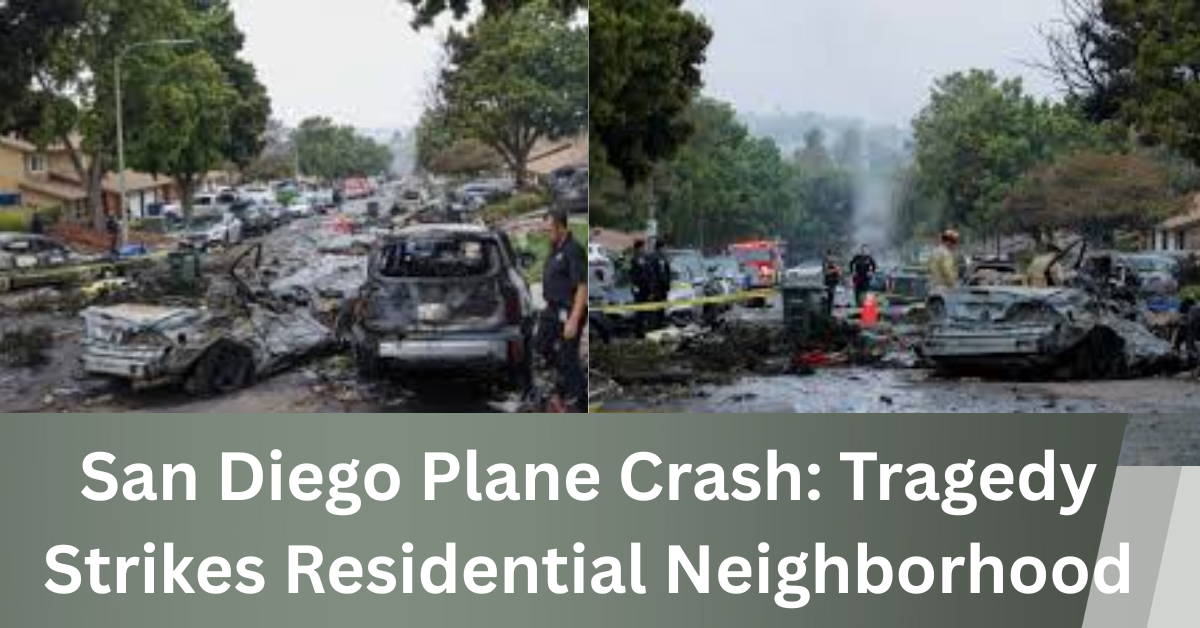
On May 22, 2025, a tragic aviation accident, known as the San Diego Plane Crash, occurred in San Diego, California, when a Cessna Citation II jet crashed into the Murphy Canyon neighborhood. The incident resulted in multiple fatalities and injuries, causing significant damage to residential properties and vehicles. This event has raised concerns about aviation safety and the impact of such disasters on densely populated areas.
The Incident
In the early hours of May 22, around 3:45 a.m., a Cessna Citation II aircraft was involved in what is now referred to as the San Diego Plane Crash, crashing into the Murphy Canyon neighborhood of San Diego. The aircraft, registered as N666DS, had departed from Teterboro Airport in New Jersey, made a refueling stop in Wichita, Kansas, and was headed to Montgomery-Gibbs Executive Airport in San Diego.
The crash of the Cessna Citation II, now infamously known as the San Diego Plane Crash, occurred amid dense fog, with visibility reduced to approximately half a mile. Reports indicate that the plane clipped a house in the Tierrasanta area before slamming into the Murphy Canyon community. The impact caused a massive fire, damaging multiple homes and vehicles and scattering jet fuel across the area.
Casualties and Injuries
Authorities confirmed that several people aboard the aircraft died in the crash. Among the local residents, five members of a family were hospitalized for smoke inhalation, while three others were treated for minor injuries. Thankfully, despite the widespread destruction, no major injuries were reported among people on the ground.
Emergency Response
Emergency services were quick to respond, with over 50 police officers and fire personnel arriving within minutes. Hazardous materials teams were also deployed due to the presence of jet fuel. Firefighters worked tirelessly through the early morning to bring the fires under control, with only one remaining active by 7:37 a.m.
A temporary evacuation site was set up at a nearby elementary school to provide shelter and aid to displaced residents. Community support and emergency coordination played a critical role in managing the aftermath.
Investigation Underway
The FAA and NTSB have launched a full investigation into the causes of the crash. Initial findings suggest that poor visibility and low cloud cover may have played a role. Investigators are exploring the possibility that the aircraft struck a power line before impact and are reviewing flight data and pilot communications to piece together the final moments before the crash.
Community Impact
Murphy Canyon, known for being one of the world’s largest military housing communities, was deeply shaken by the event. Residents described scenes of horror as flames engulfed homes and the air was filled with smoke and the pungent smell of jet fuel.
Over 100 individuals were evacuated from their homes, and several vehicles were destroyed. Despite the chaos, community members came together to support one another, showcasing unity and resilience.
Long-Term Concerns
This crash has sparked renewed discussions about the risks of aviation activity near residential zones. Questions are being raised about the flight path of small jets, air traffic control measures during foggy conditions, and the safety standards of private aircraft.
Local officials are expected to review zoning laws and emergency preparedness strategies to reduce the risk of future disasters. The crash also serves as a wake-up call for more stringent checks and improvements in pilot training and navigation in poor weather.
Conclusion
The San Diego plane crash of May 22, 2025, stands as a heartbreaking reminder of the potential dangers small aircraft can pose to urban areas. While the exact cause is still under investigation, the tragedy has mobilized emergency services, raised safety concerns, and strengthened community ties in the face of adversity. Moving forward, comprehensive reviews and reforms are expected to enhance both aviation safety and community resilience.
FAQs
What caused the San Diego plane crash?
The cause of the crash is still under investigation, but early indicators suggest poor visibility due to dense fog and potential contact with a power line may have contributed to the accident.
Were there any survivors from the plane?
At this time, all people on board the plane are believed to have died in the crash. However, most residents in the affected neighborhood survived, though several were injured or hospitalized.
How many homes were affected?
At least 15 homes were damaged or set on fire due to the crash. Several cars were also destroyed, and over 100 residents were forced to evacuate.
What type of aircraft was involved?
The aircraft involved was a Cessna Citation II, a small business jet. It was flying from New Jersey with a planned landing at Montgomery-Gibbs Executive Airport in San Diego.
What is being done to help the victims?
Temporary shelters were established to accommodate displaced residents. Local authorities and community organizations are also offering financial and psychological support to those impacted.
How are authorities preventing such crashes in the future?
Federal and local agencies are reviewing air traffic protocols, especially under low-visibility conditions. The crash has also prompted discussions about revising flight paths and emergency preparedness in urban areas.
Read Also: People-First Content: The Key to Authentic Engagement and SEO Success
About the Author