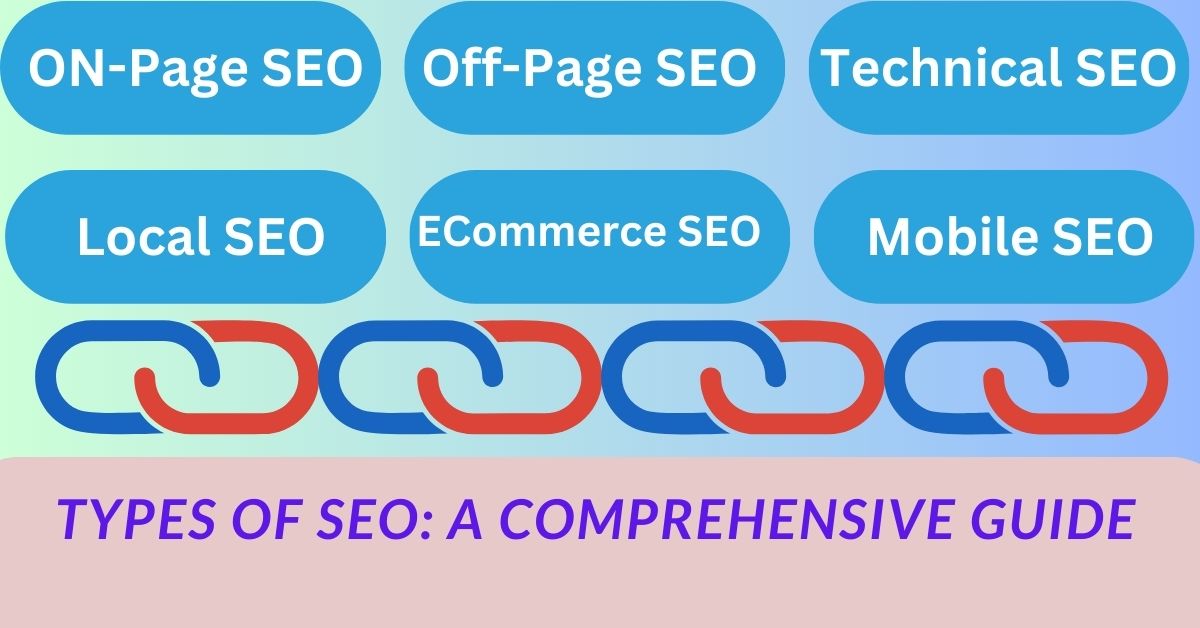
This article will go over the main types of SEO and their importance in improving web presence.Search engine optimization—or SEO—is the process of raising a website’s ranking on Google, Bing, and Yahoo by increasing its visibility. Natural traffic brought in by a well-optimized website leads to more engagement and conversion. Each of the several types of SEO has a different goal and set of strategies.
1. ON-Page SEO
- On-page SEO is the process of making particular web pages more search engine friendly. This kind of SEO focuses on enhancing a webpage’s general architecture, HTML source code, and content. HTML Important components of On- Page SEO consist in:
- Using pertinent keywords deliberately in titles, headings, meta descriptions, and throughout the content will help to optimize it.
- Ensuring creative, worthwhile, and orderly content will help to improve readability and involvement.
- Optimizing title tags, meta descriptions, and header tags will help search engines clearly grasp the information.
- Connecting relevant pages of the website to enhance navigation and distribute link equity helps to create internal linkings.
- Building neat, keyword-rich URLs can help search engine reading become easier.
2. Off-Page SEO
- Off-page SEO is actions done outside of a website to raise its ranking and authority. Mostly, this is about enhancing the reputation of the website and creating backlinks. Important elements of off-page SEO consist in:
- Getting premium backlinks from credible websites will help to improve search results and trustworthiness.
- Using social media channels to promote material will help to boost reach and interaction.
- Guest blogging—writing pieces for other websites with hyperlinks meant to increase authority and attract traffic—
- Working with influencers will help you to market material and get excellent backlinks.
3. Technical SEO
- Technical SEO aims to improve the backend of a website such that its search engine performance is better. This guarantees effective website crawling and indexing capability of search engines. Technical SEO’s main components are:
- Fast page load times help to optimize a website thereby enhancing user experience and search results.
- Making websites flexible and mobile-optimized helps to improve accessability.
- Robots.txt and XML Sitemap help search engines decide which pages to index and grasp website structure.
- Using SSL certificates can help you to guarantee website security and dependability.
- Structured Data Markup: Schema markup aids in content better understanding by search engines.
4. Local SEO
- For companies with a physical presence, local SEO is crucial since it targets maximizing a website for local search results. It helps companies draw local clients looking for surrounding goods or services. Important components of local SEO consist in:
- Building and enhancing a GMB profile with appropriate business data is Google My Business (GMB) Optimization.
- Local Citations: Including the company in TripAdvisor, Yelp, and Yellow Pages online directories.
- Ensuring Name, Address, and Phone number uniformity over all platforms is NAP uniformity.
- Encouragement of good reviews will help to establish credibility and raise ranks.
- Developing material aimed for local keywords and consumer demands requires localizing of content.
5. E-Commerce SEO
- E-Commerce SEO is mostly concerned in enhancing online stores to raise visibility and boost sales. Online product sales depend on this kind of SEO absolutely. Key elements include:
- Product page optimization calls for original product descriptions, photos, and keywords.
- Optimizing category pages with pertinent material and keywords helps with category page SEO.
- Ensuring flawless navigation, quick loading times, and mobile responsiveness guarantees user experience (UX) optimization.
- Using structured data for product ratings, prices, and availability can help you create rich snippets and reviews.
- Linking items, categories, and blogs internally to increase involvement
6. Mobile SEO
- Optimizing websites for mobile devices has become absolutely essential given the increase of mobile consumers. Mobile SEO guarantees that a website runs on tablets and smartphones as well as is user-friendly. Important features include responsive design, which guarantees the website fits several screen widths.
- Compressing pictures, applying AMP (Accelerated Mobile Pages), and streamlining code help to fast load photos.
- Making sure material is best fit for Google’s mobile-first strategy
- Targeting voice search queries, conversational keywords help to optimize voice searches.
7. International SEO
- For companies aiming at worldwide markets, international SEO is crucial. It entails making a website rank in several countries and languages top priority. Important variables include:
- Indicating language and geographical targeting for search engines, hreflang tags
- Using country-specific domain or subdomain, either ccTLDs (Country Code Top-Level Domains) or subdirectories.
- Translation and optimization of material for several languages constitute multilingual content.
- Local Keyword Research: Knowing how people search in varied areas.
- Geotargeting: Configuring Google Search Console with target nation specification.
8. Voice Search SEO
- Optimizing for voice search has become a need as voice assistants like Siri, Alexa, and Google Assistant proliferate. Important components of voice search SEO consist in:
- Using long-tail, natural-sounding searches, create conversational keywords.
- Structuring material so it seems as an immediate response is the featured snippet.
- Given that many voice searches are location-based, local search optimization is especially important.
- Content should be loads swiftly and mobile-friendly.
Conclusion
SEO is a changing field with several ways to raise web presence and ranking. Whether your emphasis is on On- Page, Off- Page, Technical, Local, E-Commerce, Mobile, International, Voice Search, or Voice Search SEO, every kind is absolutely vital in a good digital marketing plan. Knowing these SEO kinds helps companies create a whole strategy to properly reach their target market and improve their online profile.
FAQs
1. What is the main difference between On-Page and Off-Page SEO?
On-Page SEO involves optimizations you make on your own website, such as improving content, meta tags, and internal linking. Off-Page SEO involves actions taken outside of your website to improve its authority and ranking, primarily through building backlinks and social media engagement.
2. Why is Technical SEO important if my content is already good?
Technical SEO ensures that search engines can effectively crawl, index, and understand your website. Even with excellent content, issues like slow page speed, poor mobile responsiveness, or a confusing site structure can prevent search engines from properly ranking your pages, making your great content hard to find.
3. My business has a physical location; which type of SEO is most critical for me?
For businesses with a physical presence, Local SEO is absolutely essential. It focuses on optimizing your online presence to attract local customers through strategies like Google My Business (GMB) optimization, managing local citations, and ensuring your NAP (Name, Address, Phone number) is consistent across the web.
4. What is the primary goal of E-Commerce SEO compared to general SEO?
While general SEO aims to increase visibility and traffic, the primary goal of E-Commerce SEO is specifically to drive product sales and conversions. It focuses on optimizing product pages, category pages, and the user experience (like fast loading times and easy navigation) to directly boost online sales.
5. How does Voice Search SEO differ from traditional SEO?
Voice Search SEO optimizes for natural, conversational language and question-based queries (long-tail keywords) used with voice assistants. It often focuses on providing direct answers to secure a “featured snippet” position, as these are commonly read aloud by voice assistants in response to a query.
6. What is the purpose of International SEO?
International SEO is used by businesses that want to rank their website in multiple countries and languages. Its purpose is to correctly signal to search engines (using methods like hreflang tags and country-specific domains) which geographic audience and language a specific page is targeting, preventing international traffic conflicts.
Raed Also:Introduction to SEO: How Search Engines Work
About the Author