
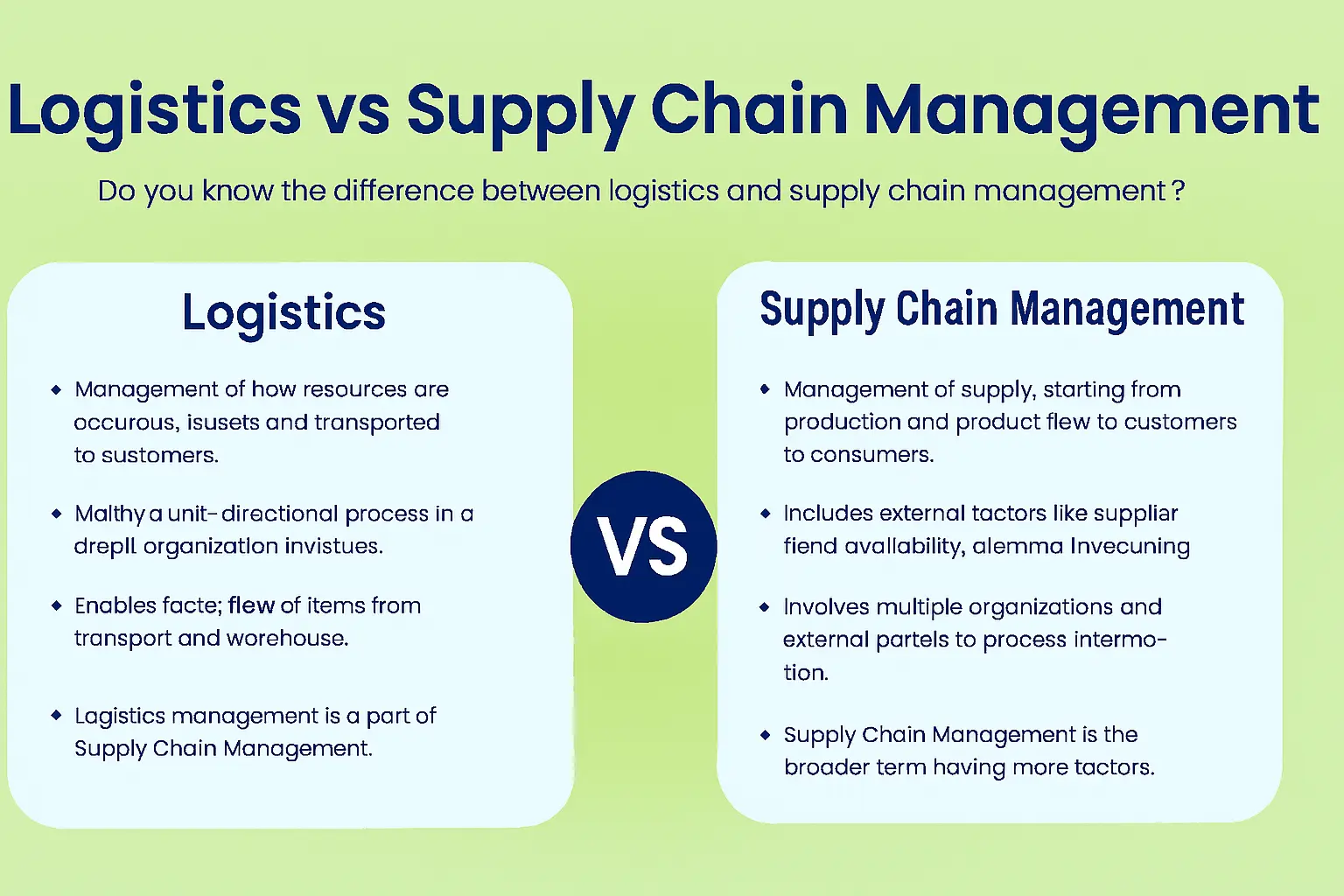
Clear, concise, and visually engaging—this infographic breaks down the core distinctions between logistics and supply chain management for better business insight.
Confused about logistics vs supply chain? Learn the real difference, key responsibilities, and why both matter for business success. Simple, engaging breakdown with examples
I’ll be real with you—every time I hear someone use logistics and supply chain management like they’re the exact same thing, I kind of cringe. It’s not that these words are tricky. They sound similar and can overlap. However, knowing the difference really impacts how businesses run.
Consider this: If logistics is the “delivery driver” ensuring your package reaches your door, then supply chain management is the whole plan behind the package. It covers how the package was made, stored, shipped, tracked, and hopefully arrived on time without getting lost in a warehouse.
So yeah, related, but not identical. Let’s break it down properly.
So, What’s the Difference Anyway?
Here’s the short version:
- Logistics is about moving stuff. Trucks, ships, planes, warehouses, inventory… it’s all about making sure products physically get from point A to point B.
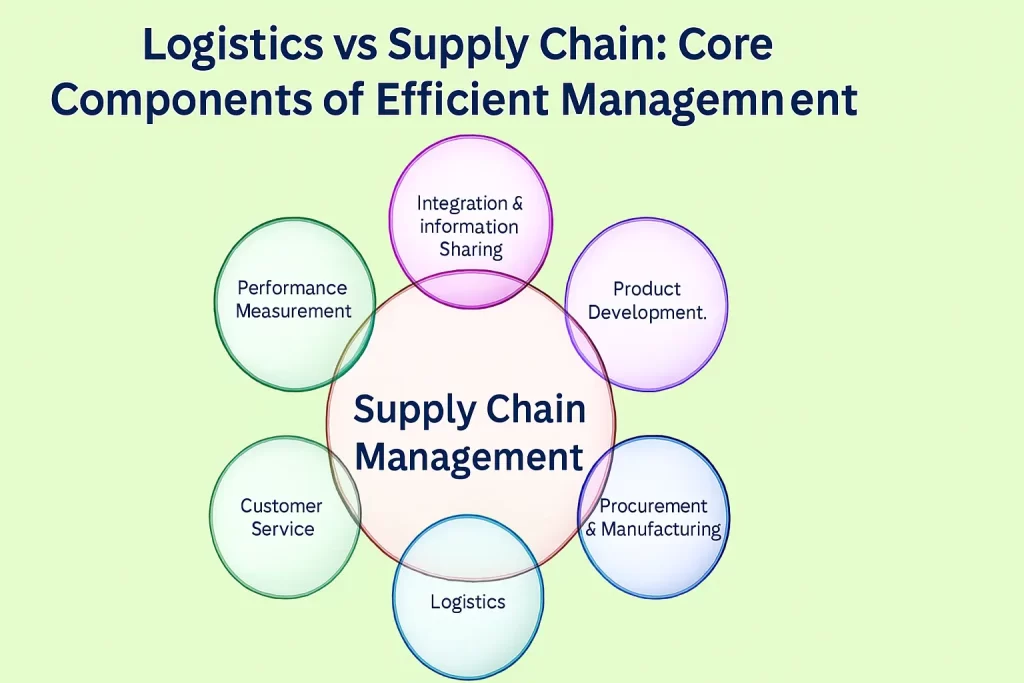
- Supply chain management (SCM) is the big-picture strategy. It includes logistics. It also covers sourcing raw materials, working with suppliers, and designing production. Additionally, it handles customer service and returns.
Logistics is like the road trip. Supply chain is the whole vacation plan. It includes where you’ll stay, who pays for gas, which attractions to visit, and how to avoid fights with your travel buddies along the way.
Logistics vs SCM Explained in Plain Words
When I first worked in logistics (way back, before I even knew supply chain was a bigger umbrella), I honestly thought they were the same thing. To me, logistics was everything—transportation, storage, packaging. Done.
But then you realize supply chain people are thinking way broader. They’re asking:
- Where are we even getting the materials?
- Should we build this product in China, or is nearshoring in Mexico smarter?
- How do we make sure the final customer is happy.
Logistics is like a solid puzzle piece. Supply chain is the full puzzle on the table.
Logistics: The Boots on the Ground
Let’s give logistics its proper credit though. Because without it, the whole “supply chain” just falls apart.
Here’s what logistics usually covers:
- Transportation management (planes, trucks, ships, you name it)
- Warehousing and inventory (keeping track of what’s where)
- Order fulfillment (picking, packing, and shipping orders)
- Packaging & distribution (getting the product presentation right and delivering it)
If logistics messes up, like with a shipment delay or damaged boxes, customers don’t care about a “solid supply chain strategy.”” They just see failure. That’s why logistics feels like the heartbeat of the chain.
I once ordered a gadget online, and it literally went on a tour across three countries before reaching me. I’m not kidding—tracking updates were like: Shenzhen → Dubai → Istanbul → Frankfurt → Karachi. Cool trip, but I didn’t pay for my headphones to see the world. That’s logistics at play (and sometimes, misplay).
Supply Chain Management: The Bigger Picture
Now, zooming out. Supply chain management isn’t just about movement—it’s about connections and collaboration.
Picture this:
- Suppliers making raw materials.
- Manufacturers turning raw materials into products.
- Retailers or distributors getting those products in front of customers.
- Logistics providers moving things around in between.
Supply chain is the glue that holds all those players together. Here’s where strategy comes in: SCM isn’t just about cutting costs. It’s about forming partnerships, being creative, planning ahead, and ensuring smooth operations during disruptions. (COVID supply chain chaos, anyone?)
Ever notice how Apple can launch a new iPhone globally without running out of stock on day one? That’s world-class supply chain planning. Logistics moves the boxes, but supply chain makes sure the boxes even exist, in the right color, quantity, and country.
Collaboration Is the Secret Sauce
This is the part most people overlook. Supply chain management is basically a giant collaboration game.
Suppliers, manufacturers, retailers, third-party logistics providers (3PLs)… everyone has to play nice. One weak link? The whole chain wobbles.
I read once that about 79% of companies with “high-performing supply chains” see better revenue growth than their peers. Makes sense—you keep customers happy, costs predictable, and products flowing, and boom, you’re ahead of the competition.
But it’s not all rosy. Collaboration means if one partner screws up, everyone pays the price. If a supplier misses a deadline, logistics can’t fix it. If logistics is late, customer service takes the hit. It’s like group projects in school—one slacker can drag the whole team down.
Different Types of Logistics (Yep, There’s More Than One)
Here’s where it gets fun: logistics itself breaks down further.
- Inbound logistics → getting raw materials into the factory.
- Outbound logistics → delivering finished goods to customers.
- Reverse logistics → handling returns, repairs, recycling.
Reverse logistics especially is becoming huge with e-commerce. Amazon’s “easy returns” promise? That’s not magic, that’s reverse logistics on steroids.
And many businesses now outsource these things to 3PLs (third-party logistics providers). They take care of shipping, warehousing, even last-mile delivery. Basically, they let companies focus on their core work while experts handle the moving pieces.
Roles & Responsibilities: Who Does What?
This part always helps clear the fog.
- Logistics roles → transport managers, warehouse managers, dispatchers, inventory planners. They’re tactical, day-to-day problem solvers.
- Supply chain roles → procurement managers, supply chain analysts, demand planners, strategy leads. They’re big-picture thinkers connecting all the dots.
Logistics staff often ask, “How do we get this shipment delivered today?” Supply chain teams, on the other hand, focus on the bigger picture. They ask, “How do we ensure every shipment for the next six months is on track?””
Both are critical—but different mindsets.
Why the Confusion Exists
Honestly? It’s because the two are so tightly connected. Every logistics choice impacts the supply chain. Also, every supply chain strategy requires strong logistics.
Plus, companies sometimes blur the titles. You’ll see job postings for “supply chain manager” that are basically logistics-heavy, and vice versa. No wonder people use them interchangeably.
But if you really want to impress in a meeting (or just sound like you know your stuff), remember this:
- Logistics = execution (the doing).
- Supply chain = strategy (the planning + doing + collaboration).
FAQs People Ask All the Time
1. Is logistics part of supply chain?
Yep, 100%. Logistics is one part of the supply chain, just like your delivery guy is part of the whole shopping experience.
2. What’s the main difference logistics and supply chain?
Logistics is moving and storing. Supply chain is managing the whole journey from suppliers to customers.
3. Logistics vs SCM explained quickly?
Logistics = trucks, warehouses, deliveries. Supply chain = strategy, planning, suppliers, logistics, and customer service all together.
4. Which career is better—logistics or supply chain?
Depends on your vibe. Logistics careers are more hands-on, operational, problem-solving on the spot. Supply chain careers lean strategic, analytical, planning for months or years ahead.
Final Thought
So yeah, logistics and supply chain are not the same thing, even though people love to mash them together. Logistics keeps things moving day-to-day. Supply chain management zooms out and makes sure the whole operation—even the hidden parts—is working in sync.
And honestly, both are crucial. Without logistics, customers get cranky because orders are late. Without supply chain management, companies waste money, miss opportunities, and can’t scale.
If you run a business or just wonder how packages get to you, knowing the difference helps you see the hard work behind the scenes.
Next time someone says, “Oh yeah, logistics and supply chain are the same,” you’ll know better. And maybe, just maybe, you’ll feel like dropping a little mic: “Actually, logistics is just one part of the supply chain. Let me explain…”
Read Also: SEO vs SEM: Key Differences
About the Author