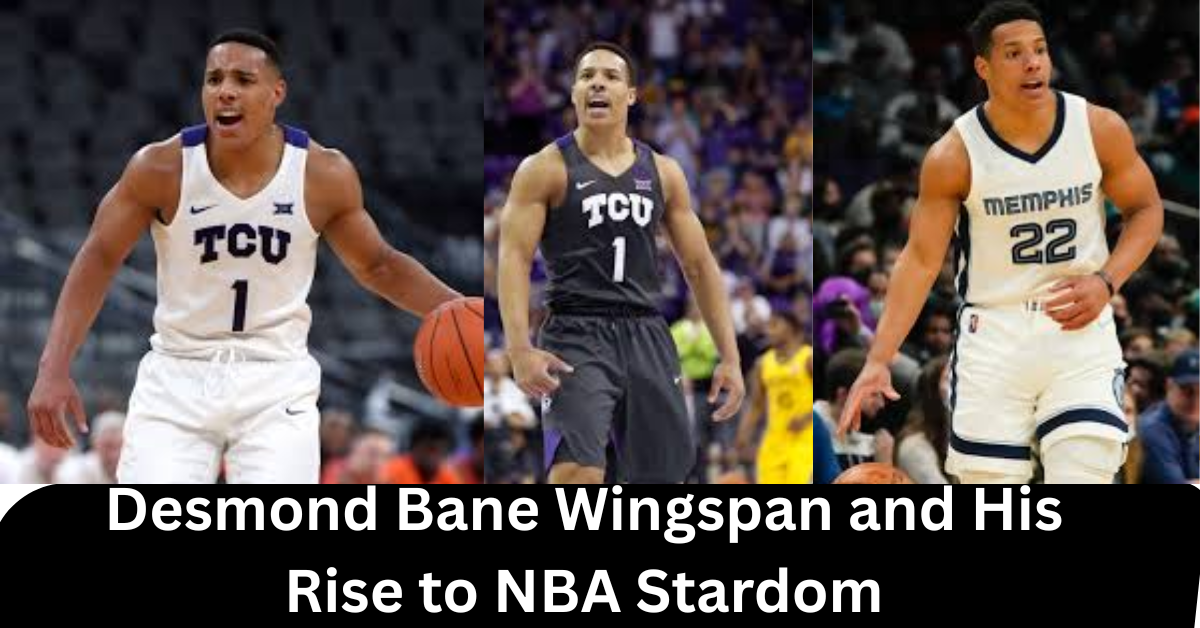
Desmond Bane Wingspan and his success story. He joined the league, but he didn’t have athletic skills or a long wingspan like most teammates. His wingspan is shorter than his height. This surprised some people during the 2020 NBA Draft. Despite the doubters, Bane has made a name for himself. He is now one of the most skilled and reliable young guards in the league.
Let’s explore the hype about Desmond Bane’s wingspan. We’ll see what it means and why it hasn’t held him back in the NBA.
Biography
| Field | Information |
| Full name | Desmond Michael Bane |
| Category | Professional basketball player (NBA) |
| Nationality | American |
| Birthdate | 25-Jun-98 |
| Birthplace | Richmond, Indiana, U.S. |
| Gender | Male |
| Profession | Professional basketball player — currently with the Orlando Magic (NBA) |
| Major income source | NBA salary / player contracts (and likely endorsements) |
| College | TCU (Texas Christian University), played 2016–2020 |
| Draft / Drafted by | 2020 NBA Draft — 1st round, 30th overall (selected by Boston Celtics; traded to Memphis Grizzlies) |
| Listed height / weight | 6 ft 5 in (1.96 m); 215 lb (98 kg) |
What’s the Big Deal About Wingspan?
In the world of basketball, wingspan is often seen as a big advantage. It’s the distance from fingertip to fingertip when a player stretches their arms. For many, this span is longer than their height. This extra reach can help with blocking shots, grabbing rebounds, and disrupting passes.
Most NBA guards standing around 6’5” like Bane usually have a wingspan of 6’7” or more. But Bane’s wingspan is about 6’4”, slightly shorter than his height. For scouts and analysts, that was a red flag. They worried he might have trouble defending against taller, longer players. They thought he wouldn’t contest shots effectively.
Draft Night Doubts
After leaving TCU (Texas Christian University), Bane was known as one of the top shooters in college basketball. He shot over 40% from three-point range and was known for his strong build, leadership, and mature game. But the concerns about his wingspan — and overall athleticism — caused his draft stock to dip.
He was finally picked 30th overall by the Boston Celtics and traded to the Memphis Grizzlies. While some saw him as a “safe” pick, few expected him to become a core piece of a playoff team so quickly.
Turning a ‘Weakness’ Into a Non-Issue
Fast forward to today, and it’s clear that Desmond Bane didn’t let that one measurement define him.
Despite his shorter wingspan, he’s become one of the Grizzlies’ most consistent and impactful players. How did he do it? Let’s take a look at what makes him special:
- Incredible Strength: Bane has a strong, muscular build. This helps him compete well on both ends of the court. He can finish despite contact, fight through screens, and defend bigger players — all without needing a long reach.
- Smart Defender: While he may not have the length to swat shots left and right, Bane is incredibly smart on defense. He positions himself well, plays with discipline, and doesn’t make many mistakes. His basketball IQ makes up for what he lacks in wingspan.
- Elite Shooting: Let’s be honest — his shooting is a big reason wingspan doesn’t even matter. He’s become one of the best shooters in the league, especially from beyond the arc. That ability stretches defenses and opens up the floor for his teammates.
- Hard Work and Mindset: Perhaps most importantly, Bane is a worker. He’s constantly in the gym, improving his game, and proving doubters wrong. His attitude, focus, and determination have played a huge role in his success.
Proving the Doubters Wrong
Desmond Bane isn’t just a role player. He’s a starter and a difference-maker for one of the Western Conference’s top teams. In just his second season, he was averaging over 18 points per game and knocking down threes with ease. He’s fearless, confident, and shows up in big moments — qualities that can’t be measured by a tape.
His development has been fun to watch, and it’s changed the way people view the importance of certain physical traits. Yes, a long wingspan is helpful. But if you can shoot, defend with smarts, and outwork everyone in the gym? That’s just as valuable — maybe even more so.
Conclusion
Desmond Bane’s wingspan might not jump off the page, but it’s clear that it hasn’t held him back one bit. If anything, it’s helped tell a bigger story — one about not letting numbers or scouting reports define your potential.
His rise in the NBA shows that with skill, effort, and a strong mindset, players can succeed in ways that defy expectations. Bane is proof that heart, hustle, and talent often matter more than inches.
FAQs
Q: How tall is Desmond Bane and what is his wingspan?
A: Desmond Bane is about 6’5″ tall, but his wingspan is measured at around 6’4″, which is a little shorter than his height.
Q: Why was this a concern before the NBA Draft?
A: Most NBA players have wingspans longer than their height. A shorter wingspan can hurt defense and rebounding. So, scouts were unsure how Bane would do against taller opponents.
Q: Has it affected his performance in the NBA?
A: Not really. Bane has thrived in Memphis, thanks to his elite shooting, strength, and basketball IQ. His shorter wingspan hasn’t stopped him from becoming one of the Grizzlies’ most important players.
Q: What can young players learn from Desmond Bane?
A: Don’t let physical “limitations” discourage you. Work on your skills, play smart, and stay determined. Effort and mindset can take you far — just like they did for Bane.
Read Also:Did Phil Robertson Die? Remembering the Patriarch of Duck Dynasty
About the Author